
The fashion industry is notorious for its internships. Finding one is difficult, not to mention the work itself. As a student, you are constantly pressured to apply yourself, to not “waste your time”. Some universities require us to do one; some only heavily encourage us. But what happens if your industry of choice, namely the glorious one we call fashion, makes the process more difficult than we anticipated? Is it realistic to anticipate a job offer at the end? Throughout seven interviews with those who have been through it all, I aimed to answer these questions to find the reality of interning in fashion.
Step 1: Finding an Internship
So, how to get started? On paper, it’s simple. Job boards, LinkedIn, cold emails, connections. The options are not new. The real question isn’t where to look, it’s how long you can keep going through rejections, or worse, silence.
“Nobody wants students for just one month or two months. (…) If you’re a student and you don’t know people, you won’t find an internship.”
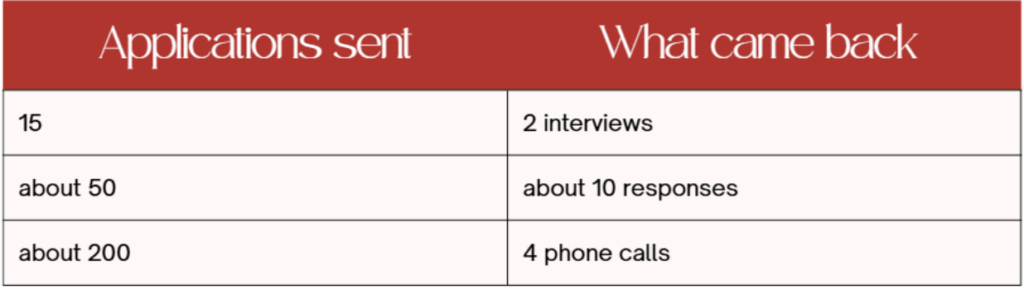
And the silence may be the most discouraging part of the process. When you invest months into creating tailored applications, not even receiving a rejection letter can feel deflating.
When the company’s answer was yes, timing was the catch. One interviewee, looking for a summer internship, was asked: “Are you free starting from tomorrow?”
Their advice to you:
- Don’t be too picky. Worst case, you’re there for six months, you don’t like it, move on, but it’s already months of experience on your CV.
- Fix your CV. One interviewee booked an office hour with her program’s career advisor, and a generic CV was her biggest problem.
- Ask people you know for referrals, and sit down with friends to look through postings and CVs together.
- Reach out to people in the department you are interested in before you apply. One interviewee messaged PR staff on LinkedIn before her internship, one of whom later turned out to be her supervisor.
Step 2: The Negotiation
Or, the lack thereof! While the negotiation process is essential in securing a job later in life, interns often do not feel like they have a choice. After enough rejections, many applicants feel deflated, and desperate to be chosen for anything, which hands the company all the bargaining power. If you push back, there’s always someone who won’t.
Almost everyone I spoke to felt they had no choice. One intern considered asking for four days a week instead of five, but let it go:
“There are probably so many people who want the position that if I pushed back, I feel like my chances would have been smaller.”
One interviewee faced visa constraints upon receiving a UK-based internship offer at a luxury house. Given the fact that it was already an unpaid position, the monthly visa fee of £4000 would have left the respondent with a serious deficit. (I do wonder how many applicants can afford such a fee without citizenship or serious financial support, and how this potentially limits British fashion houses)
Even if you find yourself in the perfect scenario where nothing is wrong with the contract itself, you’re starting from nothing:
“You can’t say, ‘I have X years of experience and this is what I deserve.’ (…) Internships, across all industries are not super well paid, especially in Italy.”
However, this fear is mostly untested. One intern agreed to spend the summer in another city, which weighed on her entire experience, only to find out afterwards that the company would have placed her closer to where she already lived. She never asked; she was afraid to. That’s how one-sided the process feels: many interns don’t ask, assume the answer is no, and in doing so, unintentionally help keep the imbalance in place.
Step 2.5: The Salary
Well, at least fashion pays well. Sometimes. While some interviewees in the luxury sector have asked me not to disclose specific information on their salaries, public data tells us how much LVMH offers, which many companies in this sector match.
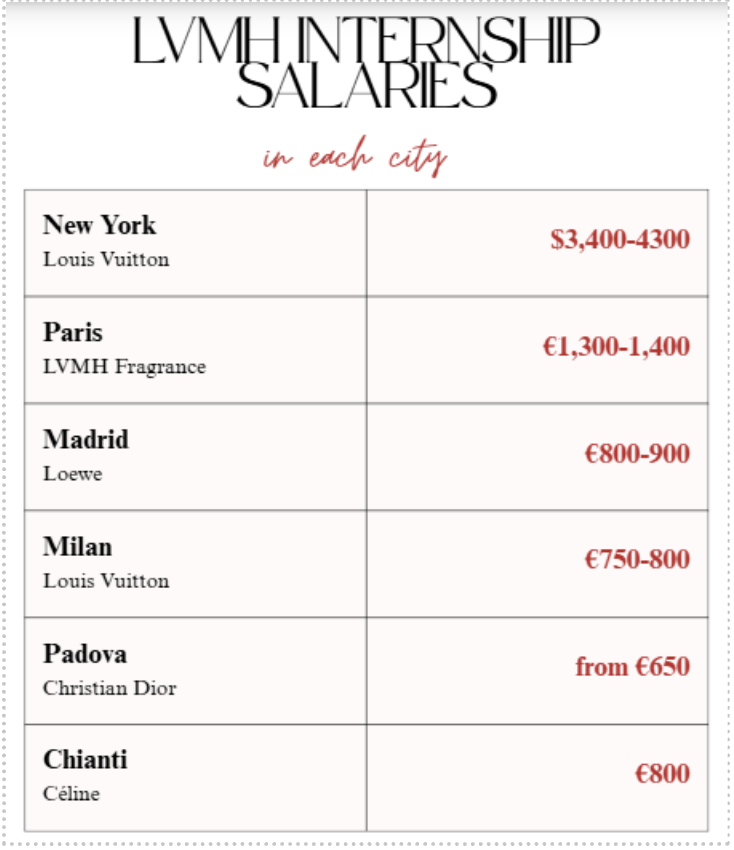
However, it is no secret that some are unpaid or simply pay way less. In the Netherlands, for example, full-time fashion internships can easily pay as little as 250-450 euros a month (sometimes even less than that). In a country where the minimum wage is about 15 euros/hour, how can they get away with paying roughly 1.4- 2.60? The answer is in the policies of study-linked internships.
The EU’s currently abides is the non-binding 2014 Council Recommendation on a Quality Framework for Traineeships. This recommends companies to inform trainees about their pay, but it doesn’t require any specific payment terms.
The Traineeships Directive was proposed by the Commission in March 2024. It’s still under negotiations, with the next session scheduled for 16 November. But what would it change? The directive would recommend a written agreement with a set time limit and a set contact person, as well as address malpractice concerns against trainees and interns. However, it doesn’t propose changes in required wages, and most importantly, it excludes study-related internships, which most students do for credit.
Step 3: The Work Itself
Picture a fashion intern, what are they doing exactly? Fetching coffee, organizing boxes of clothing, and running around the city frantically? Or sitting at their desk calmly, doing important research and actually contributing to the company? You wouldn’t be wrong either way.
According to a study by Kozar and Hiller Connell, students appreciate their fashion internship experience the most when they are valued as an integral member of the company and are trusted with important responsibilities (2015).
Still, it is a common assumption that interns won’t be asked to do anything worthwhile. While that may be true in some cases, my interviews revealed that their experience has been a mix of challenging and mundane tasks. In some cases, it was a matter of building confidence, while in others, the reality of the job was underwhelming.
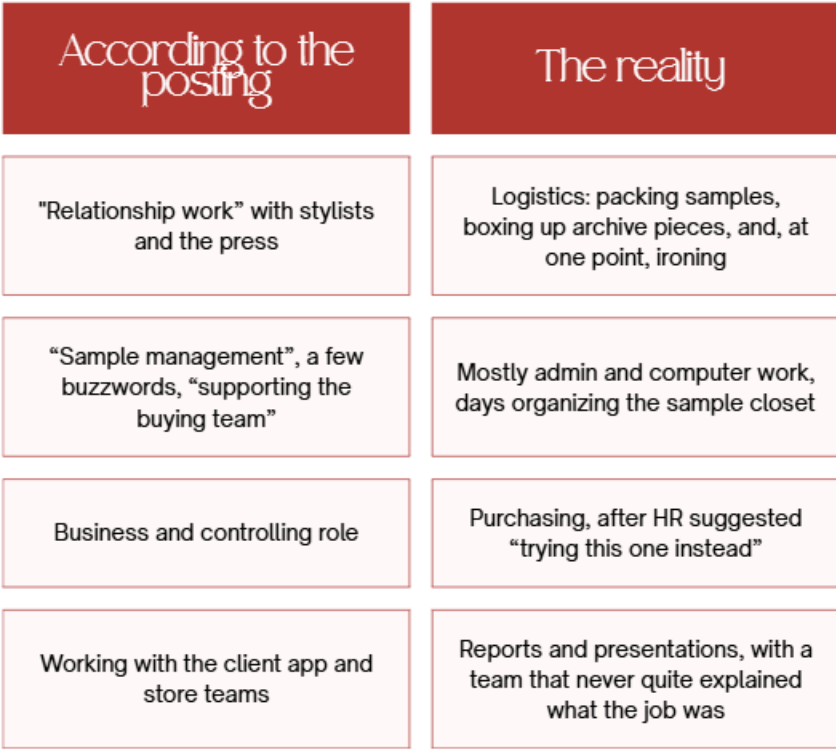
So is it all organizing and coffee runs? Not quite. Most of the people I spoke to actually liked their work, and it was the real kind: market research, budgeting, rolling out campaigns, talking to clients. (Aside from some occasional boxes.)
Of course, it is vital to learn how not to overwork yourself. Many companies heavily rely on their intern infrastructure, who are, let’s face it, cheap labor from their POV. Without effective communication regarding workload, this results in a grim picture. Endless cycles of burnt-out interns, each one hoping to learn something valuable. According to some, the most valuable skill is learning how to adapt to a hectic workplace and strict deadlines without burning out.
Step 4: Looking for Miranda
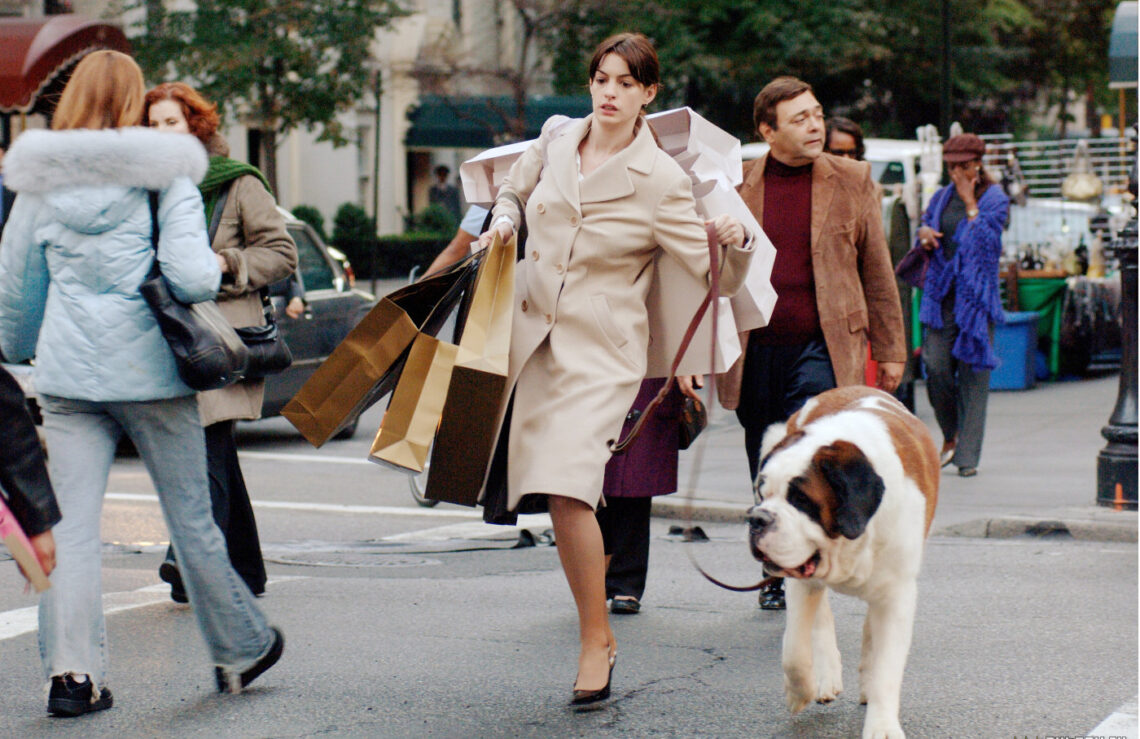
There is one question every fashion intern has been asked before: is it really like Devil Wears Prada? I went looking for a Miranda Priestly across seven interviews, but surprisingly, I didn’t find one.
“It’s a lot less The Devil Wears Prada than I thought, thankfully.” One interviewee had braced herself for a cold, strictly professional environment that fashion is often thought to be, and instead found a friendly and supportive team. Overall, most of the input on the workplace environment was actually overwhelmingly positive.
Multiple interns did encounter smaller conflicts, often with employees from other teams or supervisors of their managers. These examples included a strict colleague who seemed to think interns should do anything they’re asked, coworkers who could be “a little mean”, and employees they knew to avoid for one reason or another.
“She always seems to have a preconceived impression before anything is even asked, though if you explain yourself, she can chill out a bit. Since I know I didn’t do anything wrong, I don’t take it personally or overthink it, especially since I don’t have to spend every day working with her.”
In conclusion, encountering an ice-cold Miranda as an intern is less common than most people would assume. You may run into people who distrust you solely because you’re an intern, but that usually isn’t about you personally. It’s due to fashion’s low margin for error; new hires are an added risk factor – one that is necessary to keep the business afloat, but unpredictable for seasoned employees.
Those who did encounter small differences stayed patient and hoped that the employee would warm up over time. They view it that as an intern, you should be polite, remember you’re the newest person in the room, give people a few months to get used to you, and don’t take it personally. That advice goes far; however, I would add that once mutual trust has been established, it’s vital to stand up for yourself if your character and intentions are questioned.
While the interviewees’ experiences were largely positive, that isn’t the reality for every placement. Having navigated my own share of misunderstandings during my time interning at fashion companies, I’ve learned that facing workplace friction requires a delicate balance: communicate with your manager, explain yourself, look for compromises, and take legitimate criticism in stride. But just as importantly, learn to speak up when something is unfair or unfounded. Growing professionally means knowing your worth isn’t defined by a misstep or a coworker’s harsh opinion.
Fashion is a tough business, but being an intern doesn’t mean blindly accepting mistreatment; it’s about growing both professionally and personally.
Step 5: After Your Internship – What Now?
Many interns hope to get hired at their company full-time after their experience, but how many of them actually get the job? Unfortunately, none so far. Some interviewees are still in the process, with hopes of securing a job offer, but some have expressed worry over the employment rates.
Junior-level positions are disappearing at faster and faster rates, some of which can (unsurprisingly) be linked to AI’s rising importance in the workplace. While automation may not be eating up higher-level roles, entry-level positions are uniquely vulnerable (Butler-Young, 2026). Over the past few months, fashion educators like the Vogue College of Fashion, ESMOD, and UAL have weighed in on the future of fashion hires, arguing that today’s market demands an interdisciplinary approach, or “hybrid talent,” alongside a sharp understanding of brand strategy (ESMOD, 2026; UAL Awarding Body, 2026; Vogue College Editorial, 2026).
A student at Bocconi, then, should be optimistic about their prospects, right? After their internships, that’s not necessarily the case.
Some were told that there simply weren’t any positions open at the company. And even when a company does recognize your contribution, the offer isn’t always a job: I’ve seen an intern get asked to stay for another round of internship instead. And not everyone wants to stay anyway, with some realizing that this wasn’t the right job, or even company, for them. This, however, means going back to Step 1: you finish an internship and start applying once again.
Parting Messages: From Them, To You.
“Follow your dreams and dream big. Big things will arrive.”
“Keep following your heart if it wants you to work in the fashion industry. It’s a fabulous industry and I do encourage it. Don’t get discouraged by the no replies. (…) Whatever is meant for you will find you.”
“Be curious, try also the things that at the beginning you don’t want to do. (…) It gets better, I think for everyone.”
“Don’t stress too much. It’s going to be fine in the end, and otherwise it’s only a couple of months.”
“The environment will pressure you into finding an internship, because otherwise you’ll feel left behind. (…) But you really don’t have to. If you do something you don’t like just because you feel you need to, you’re not going to have a good time.”
“You really need to be passionate about it. (…) As long as you don’t give up applying and interviewing, you’re going to find your way.”
written by Bori Kontró
References
Butler-Young, S. (2026, February 9). What happened to fashion’s entry level jobs? The Business of Fashion. https://www.businessoffashion.com/articles/workplace-talent/fashion-entry-level-jobs-2026/
Council of the European Union. (2014). Council Recommendation of 10 March 2014 on a Quality Framework for Traineeships (2014/C 88/01). Official Journal of the European Union, C 88, 1–4. https://eur-lex.europa.eu/legal-content/EN/TXT/?uri=OJ:C:2014:088:TOC
ESMOD. (2026, September 15). Fashion business 2026: As fashion evolves, so do the skills it demands. https://www.esmod.com/en/projets/fashion-business-2026-as-fashion-evolves-so-do-the-skills-it-demands/
European Commission. (2024). Proposal for a Directive of the European Parliament and of the Council on improving and enforcing working conditions of trainees and combating regular employment relationships disguised as traineeships (‘Traineeships Directive’) (COM(2024) 132 final/2). European Commission. https://eur-lex.europa.eu/legal-content/EN/TXT/?uri=COM:2024:132:FIN
Graziano, G. (2026, September 30). LVMH internship salary. Glam Observer. https://glamobserver.com/lvmh-internship-salary/
Kozar, J. M., & Hiller Connell, K. Y. (2015). The fashion internship experience: Identifying learning outcomes in preparing students for the ‘real world.’ International Journal of Fashion Design, Technology and Education, 8(1), 3–11. https://doi.org/10.1080/17543266.2014.974690
UAL Awarding Body. (2026, July 6). Preparing fashion students for the future of fashion. University of the Arts London. https://www.arts.ac.uk/partnerships/ual-awarding-body/stories/preparing-fashion-students-for-the-future-of-fashion
Vogue College Editorial. (2026, June 12). The future of fashion roles. Vogue College of Fashion. https://www.voguecollege.com/articles/london/the-future-of-fashion-roles/