It is widespread knowledge that fashion is cyclical, but it is less known that its trends can be linked to the ups and downs of the economy. With TikTok flooded by recession-core, dupe culture, and the return of early-2000s model-off-duty dressing, one has to wonder: can our wardrobes really predict a downturn? With that question and a fear of skinny jeans returning, let’s look more closely at the myths behind fashion recession indicators.


Looks from the 1920s, 1930s, and 1960s
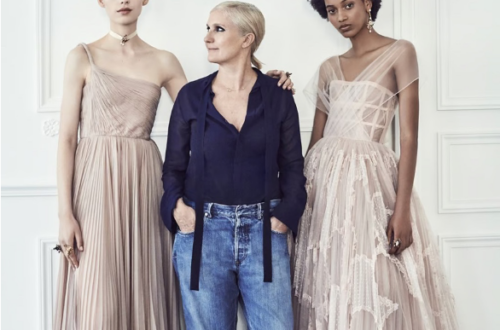
Perhaps the most well-known concept connecting recession with apparel is the Hemline Index, a theory that is often (mistakenly) credited to Wharton economist George Taylor, who studied the hosiery boom of the 1920s. The theory suggests that skirt lengths tend to rise during periods of economic prosperity and fall again when recessions set in. They reflect the public mood. In a downturn, people opt for the more conservative and somber style of a longer hem. We can see this pattern through the rise of hemlines in the 1920s before the Great Depression, and their fall post-World War II. This period was mainly marked by Dior’s “New Look” of 1947, which revolutionized fashion with nostalgia for pre-war times and a return of long, glamorous skirts right before the recession of 1949. The pattern repeated in the 1960s and 1980s.

Dior’s New Look of 1947
Economists Philip Hans Franses and Marjolein van Baardwijk at Erasmus University Rotterdam put this theory to the test in 2010. Using monthly hemline data from 1921-2009 and comparing it with NBER recession dates, they examined whether there truly is a relationship between skirts and recessions. The study showed some truth to the urban legend, as it found that “the economic cycle leads the hemline,” but there was no relationship present in the opposite direction. However, the researchers also discovered that the fluctuation is not synchronous, but rather that there is a time lag of around three years between the economic change and the subsequent shift in hemlines. This means the change in skirt length is more of an after-effect rather than a predictor of a downturn. While the maxi skirt in your closet may not mean much now, we will see its true foreshadowing capabilities in about three years.

Graph by Mages Studio Private Limited
A close relative of the Hemline Index is the Lipstick Effect, another concept that links recessionary periods to luxury consumption habits. The idea, first described by sociologist Juliet Schor in The Overspent American in 1998 —and observed by Estée Lauder chairman Leonard Lauder— claims that during tougher economic times, consumers still purchase small luxuries. Lipstick is a prime example. It’s a quieter expression of the same impulse seen in skirts. When confidence shrinks, we tend to seek comfort in older, more conservative habits. Today, that instinct lives on through Gen Z’s fascination with “little treats.” Whether it’s coffee, a candle, or a swipe of gloss, these purchases serve as small consolations (although not the most financially responsible ones) in uncertain times. Economically, it’s the income effect in motion. Demand for goods rises as income increases, except in the case of inferior goods, for which the opposite relationship is true. In this case, as opposed to larger luxury items, lipstick functions as an inferior good, so once incomes fall and more expensive products become unaffordable, consumers substitute them with lipstick. The next time you reward yourself with a little treat, remember there is no need to beat yourself up about it – it’s not you, it’s the economy.
Recessions are often also associated with officewear in fashion, or what is today termed the office siren aesthetic. Consumers feel greater pressure to work amid harsh economic conditions, and their attire reflects it. From Mugler to Stella McCartney, this phenomenon is easy to see in recent fashion weeks. Skirts play a key role in the return to structure, and the Hemline Index appears subtly throughout. What this trend seems to say is that though the job market feels dire, at least our outfits do not have to be. Another example is an emphasis on understated “quiet luxury,” characterized by an absence of obvious logos, which allows consumers to still strut in style even as large brands become less affordable. Together, these preferences —longer skirts, tailored lines, muted elegance— show how fashion continues to respond to economic pressure with restraint rather than excess.


S/S 2026 Looks by Mugler, Chanel, Stella McCartney respectively
Not every so-called “recession indicator” flooding Instagram and TikTok feeds, like peplum skirts and skinny scarves, can be taken too seriously. Most are just the internet entertaining itself. However, a deeper look shows that some indicators, like hemline lengths, lipstick purchases, and the little treat economy actually have economic logic to back them up. Despite the challenges in empirically evaluating the reliability of these indicators and their limited predictive capabilities, there is definitely an undeniable link present between fashion and the economy that is worth further exploring. After all, as Miranda Priestley put it in The Devil Wears Prada, “That blue represents millions of dollars and countless jobs”. Though often faced with skepticism or jokes today, I hope that more research will be dedicated to the subject, to continue the myth-busting in the field and perhaps lead to meaningful discoveries.
Written by Nastassia Tsialpuk
Sources:
https://www.nasdaq.com/articles/what-hemline-index-and-it-accurate-recession-indicator
https://www.eur.nl/en/media/2020-11-hemline-and-economy-there-any-match
https://www.investopedia.com/terms/l/lipstick-effect.asp
https://www.instyle.com/fashion/clothing/what-is-the-hemline-index-real
https://www.dw.com/en/the-new-look-how-christian-dior-revolutionized-fashion-70-years-ago/a-37491236