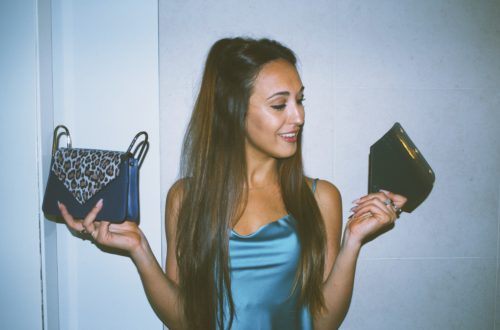

Scroll through TikTok or Instagram today and you’ll quickly encounter a familiar phrase: “run, don’t walk — I found a dupe.” Whether it’s a $30 version of a $900 designer bag or a fast-fashion reinterpretation of a viral runway piece, the “dupe economy” has become one of the defining phenomena of contemporary fashion culture. But behind the excitement lies a more complex question: are dupes making fashion more accessible, or are they quietly eroding creativity and value within the industry?
At its core, the dupe economy is not new. Fashion has always operated through cycles of inspiration, reinterpretation, and diffusion. Luxury designs trickle down into mass markets, and trends are constantly reimagined across price points. What is new, however, is the speed and scale at which duplication now occurs. Social media platforms, combined with ultra-fast supply chains, allow brands to replicate and distribute “lookalikes” within weeks, sometimes even days after a product gains traction online.

Recent viral examples illustrate just how powerful this system has become. The Miu Miu ballet flats, initially priced at luxury levels, quickly inspired near-identical versions from Zara, H&M, and countless TikTok-famous brands. Similarly, The Row’s 90s bag became a viral sensation on TikTok, quickly followed by a surge of Amazon dupes promoted by influencers comparing the minimalist luxury original with near-identical, budget-friendly alternatives. Even more striking is the case of the Bottega Veneta drop earrings: within weeks of trending on social media, near replicas flooded platforms like Shein and AliExpress, sometimes retailing for less than €10.

For many consumers, this shift feels empowering. Dupes democratize fashion by breaking down the exclusivity traditionally associated with luxury. They allow a wider audience to participate in trends that were once financially out of reach, reshaping fashion into a more inclusive and participatory space. In a generation increasingly driven by aesthetics and digital visibility, dupes provide a way to engage with style without the burden of high price tags.
TikTok has played a central role in normalizing and even glamorizing this behavior. Hashtags like #dupe, #designerdupe, and #TikTokMadeMeBuy have accumulated billions of views. Creators routinely build content around “best Amazon dupes” or “luxury look for less,” turning imitation into a form of entertainment and expertise. One viral example involved the Massimo Dutti jeans retailing at €50, widely presented as the “perfect dupe” for Saint Laurent denim priced above €800, with users highlighting near-identical cuts, washes, and silhouettes at a fraction of the cost.

Yet this accessibility comes with trade-offs. Designers and smaller brands are often the first to feel the impact. When original ideas are quickly replicated by larger, more agile players, the incentive to innovate weakens. A telling example is the rise of independent designers on platforms like Instagram, whose niche designs gain traction only to be rapidly reproduced by mass-market brands without attribution. In some cases, creators have taken to TikTok themselves to call out copies of their work, sparking debates about intellectual property and fairness.
Then, we come to the topic of value. Luxury has long relied on scarcity, craftsmanship, and narrative — elements that cannot easily be duplicated. However, when consumers grow accustomed to near-identical alternatives at a fraction of the price, the perceived value of the original can begin to shift. Are people buying into a brand’s story, or simply chasing an aesthetic at the lowest possible cost?

Interestingly, consumer attitudes toward dupes are evolving. What was once quietly consumed is now openly celebrated, even reviewed and ranked online. The stigma around “knockoffs” has softened, replaced by a culture that prizes savvy consumption.
Still, cracks are beginning to show. As the market becomes saturated with copies, the uniqueness that initially made certain designs desirable starts to fade. The Jacquemus Chiquito bag, once a symbol of playful luxury, became so widely replicated that its distinctiveness arguably diminished over time. When everyone owns a version of the same product, the appeal of that product can weaken. In this way, the dupe economy risks undermining itself: its success depends on desirability, yet its very mechanism accelerates overexposure.
Moreover, ethical concerns complicate the narrative. Many dupes are produced within fast-fashion systems associated with environmental degradation and questionable labor practices. Ultra-fast fashion players like Shein, often cited in dupe culture conversations, have faced criticism for both their environmental footprint and their approach to design replication. While dupes may be more affordable, their true cost (social and ecological) remains high.

So, is the dupe economy rising or falling? The answer is likely both. It continues to expand in visibility and influence, but it is also facing growing scrutiny from consumers, designers, and industry insiders alike. Rather than disappearing, it may evolve, perhaps toward more transparent inspiration, better crediting practices, or even collaborations between high-end and mass-market brands.
Ultimately, the dupe economy forces us to confront a deeper question about what we value in fashion. Is it originality, craftsmanship, and storytelling? Or is it accessibility, immediacy, and participation? As these tensions play out, one thing is certain: the future of fashion will be shaped not only by what is created, but by how and how quickly it is copied.
For emerging fashion leaders, this debate underscores a key challenge: how to balance accessibility and profitability without compromising creativity and long-term sustainability.
By Zoe Pariente
Sources:
Fashion Law Journal — The Rise and Impact of Dupe Culture in Fashion (2024) https://fashionlawjournal.com/the-rise-and-impact-of-dupe-culture-in-fashion/
SnapDragon IP — How TikTok’s Popular #Dupe Effect is Threatening Brands (2025) https://snapdragon-ip.com/blog/tiktoks-dupe-effect-a-generational-shift-threatening-brand-protection/
Aquent — TikTok’s Sizable Effect on the Fashion and Beauty Industries (2025) https://aquent.com/blog/tiktoks-sizable-effect-on-the-fashion-and-beauty-industries