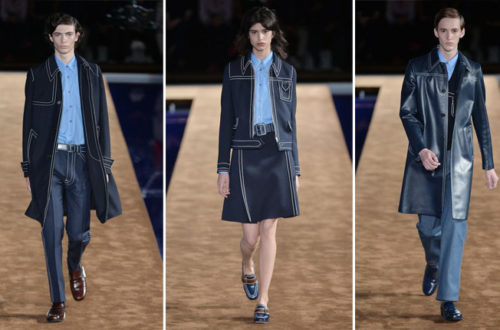
Edith Head once said, “You can have anything you want in life if you dress for it.” In a world where individuality is valued above all else, her comment might pass as shallow to some. In truth though, what we wear today continues to shape how we are seen, how we see ourselves, and how power circulates in society. Fashion is not superficial. It is a language, a signal, and often a tool of inclusion or exclusion. Even today, clothing plays a decisive role in defining identity, status, and social roles.
From the very beginning, fashion has been tied to power. Historically, what people were allowed to wear was strictly regulated: certain fabrics, colours, or accessories were reserved for the elite. Clothing made social hierarchy visible. While those explicit rules are gone, the logic behind them persists. Today, the difference is not enforced by law but by social norms, institutions, and expectations. What we wear still affects how others perceive our competence, credibility, and authority. Clothing also influences first impressions: a suit can signal professionalism, a uniform can command respect, and certain brands can imply wealth. These signals are often unconscious. Clothing can open doors or quietly close them, creating a link between appearance and opportunities. Fashion, in this sense, functions as a form of soft power.

At the same time, fashion helps define who we are. Style is often presented as a personal choice, an expression of individuality. But that freedom is not equally distributed. Gender norms, stereotypes, body standards, and expectations all shape what is considered “appropriate” to wear. For example, what is seen as “professional” clothing often reflects Western standards. Those who deviate from these norms may be judged as less serious, less capable, or less respectable, regardless of their actual skills. Clothing also plays a powerful role in defining social roles. Uniforms are the clearest example: a lab coat or a police uniform immediately assigns authority, responsibility, and trust. It is safe to say we all learn, explicitly or implicitly, early on how we are expected to dress in order to fit in. Clothing becomes part of the performance and identity. Fashion is a form of power, the vector through which we move in life and in society.
Interestingly, while traditional clothes have gradually declined in everyday use in many parts of the world, in countries such as Japan or China traditional clothing is still present, though it has been blended with modern influences and contemporary fashion trends, creating a dynamic adaptation of the past. It is a powerful experience to visit countries with such rich cultures and still encounter their history expressed through distinctive and breathtaking fashion.

“Casual” often ends up meaning the same thing for everyone: neutral colours, minimalist styles, jeans and sneakers, understated aesthetics. This can appear inclusive, but it often masks conformity. The pressure to blend in remains, just under a different label. Dressing similarly can be empowering, making spaces feel more accessible, but it can also create ambiguity and flatten individual styles and expressions, as fashion is originally a way to express one’s culture, preferences, and creativity. Power does not disappear, but it simply becomes harder to see and question, and the same goes for individuality. It is increasingly common in many countries to see less traditional clothing, meaning less visible distinction between nationalities, cultures, and backgrounds.
As a Bocconi student, I see universities as spaces where identities are formed, roles are negotiated, and future paths are shaped. Being aware of the power of fashion means recognizing both its constraints and its possibilities.
Fashion still matters because power still matters. What we wear is never just personal; it is social, deeply connected to who we are and how we want to be seen. Understanding this does not mean obsessing over appearance, but becoming conscious of the signals we send and how they are perceived.
By Sofia Torrani